Anjing's Artworks
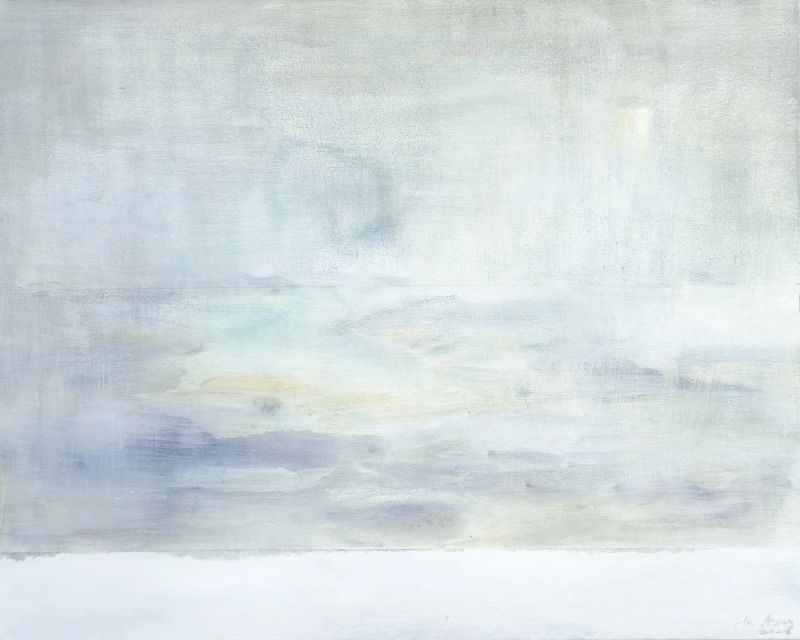
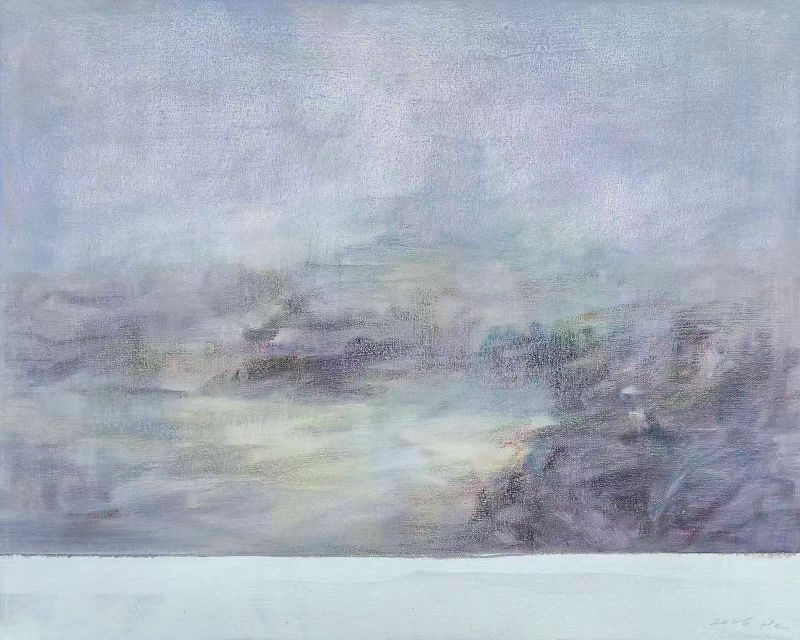
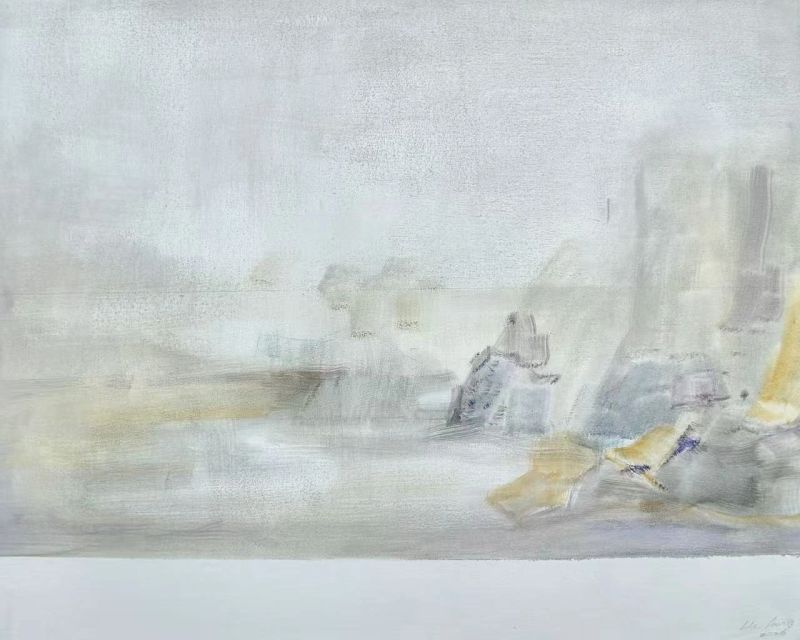
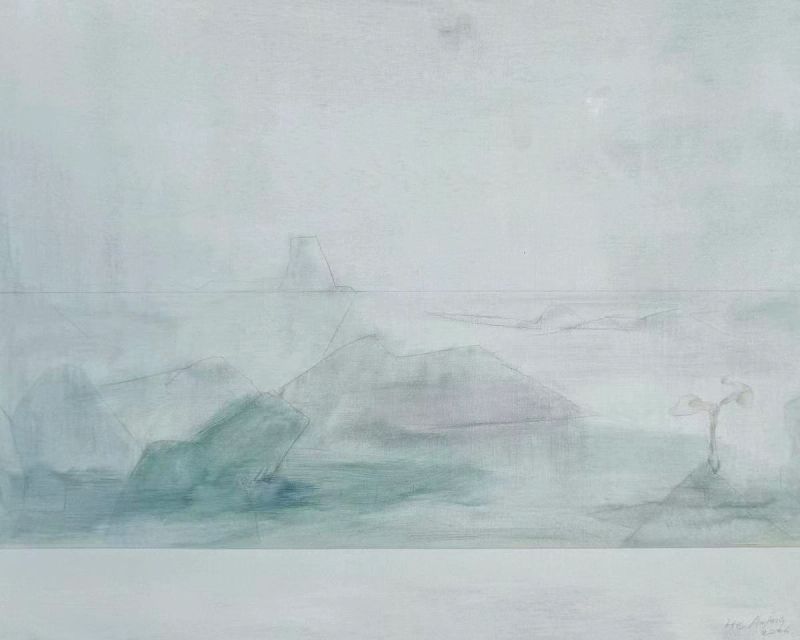
Painting What Continues Exploring how time transforms disappearance into new forms of life.Anjing He
Every visit to this portfolio feels like stepping into a serene space. The aesthetic reflects a rare tranquility, paired beautifully with unique visual narratives that linger long after you leave.James Holloway
As a contemporary artist myself, I admire the minimalist approach showcased here. It’s refreshing to see such elegance in presentation, allowing the art to take precedence.Mia Cheng
The narrative structure of the portfolio captures the essence of each artwork beautifully. It invites viewers to engage, explore, and feel the depth of emotion in every piece.Liam Roberts
I was captivated by the portfolio's calming visuals and thoughtful curation. It’s a perfect blend of simplicity and sophistication, reflecting the beauty of the Japanese aesthetic.Sophie Nguyen
HE ANJINGPainting What ContinuesExploring how time transforms disappearance into new forms of life.
I do not paint the past.
I do not paint memory.
I paint what continues after memory begins to fade.
For many years, my research has focused on Chinese art history, aesthetics, memorial writings, and visual culture. Again and again, it brought me back to one question:
Why do certain relationships continue to exist long after the people, places, or civilizations that created them have disappeared?
Painting became my way of exploring this question.
I am not interested in reconstructing history.
I am interested in revealing how time quietly transforms it.
A ruined pagoda no longer functions as architecture, yet it still shapes the landscape.
A weathered stone stele can no longer be fully read, yet it continues to carry history.
A father's voice eventually disappears, yet something of its rhythm remains within the body.
These are not memories.
They are forms of continuity.
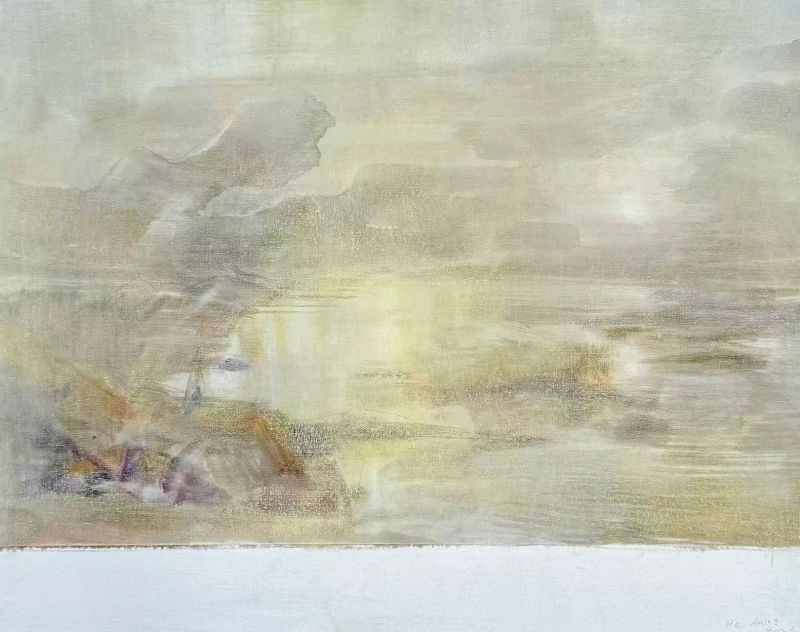
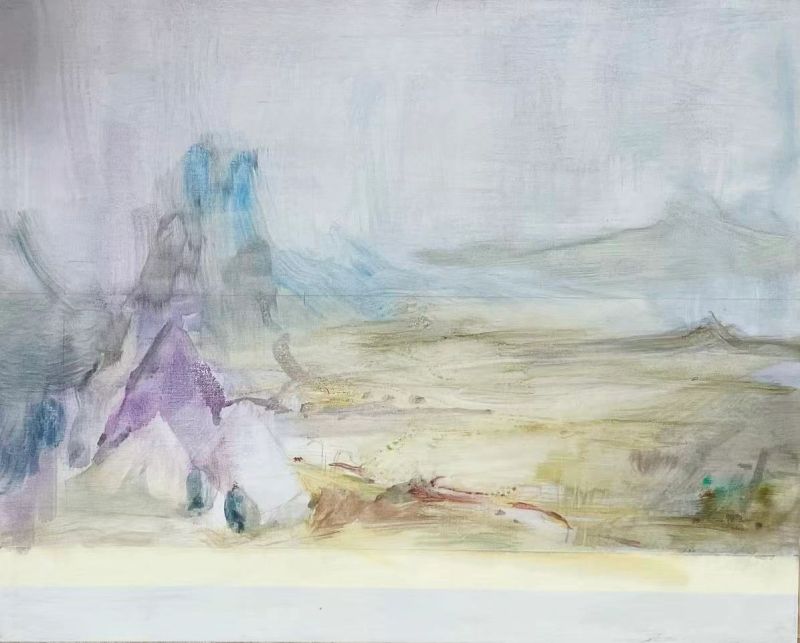
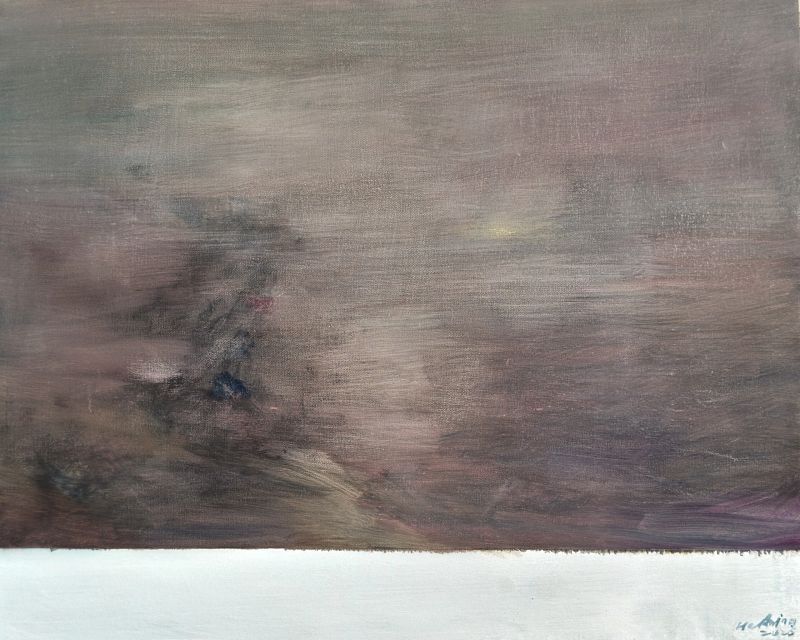
My paintings are therefore not representations of places.
They are explorations of how relationships survive after their original forms have dissolved.
Forests, mountains, ancient steps, broken walls, fragments of stone sculpture, thresholds, residual light, and slowly growing vegetation appear repeatedly throughout my work.
They are not symbols.
They are participants in time.
Material is inseparable from this way of thinking.
Working with pastel, watercolor, charcoal, matte acrylic, marble dust, repeated sanding, and gradual accumulation, I allow each surface to undergo its own temporal process.
Every painting is built through deposition, erosion, disappearance, and renewal.
The image is never completed all at once.
It slowly emerges, much like memory itself.
The white margins surrounding many of my paintings are equally important.
They are not borders.
They are spaces where images are still arriving—or quietly leaving.
In recent years, my work has gradually shifted beyond the idea of memory.
I have become increasingly interested in another question:
How does the world continue after disappearance?
Moss growing over stone.
Trees surrounding forgotten graves.
Light remaining after someone has gone.
Silence continuing to resonate within the body.
These moments suggest that disappearance is never absolute.
The world does not simply preserve what has been lost.
It transforms it into new forms of life.
Painting, for me, is not about remembering.
It is about witnessing how the visible world continues to grow through time.
THE QUESTIONEvery artist spends a lifetime asking one question.
Mine is:
How does the world continue to carry those who have disappeared?
Everything I paint grows from this question.
PHILOSOPHYMy work is grounded in three interconnected ideas.
TimeTime is not a line moving from past to future.
It is a material force that continuously reshapes the visible world.
RelationNothing exists alone.
A stone belongs to rain.
A tower belongs to the mountain.
A voice belongs to another body.
When one disappears, the relationship rarely disappears with it.
BecomingDisappearance is not an ending.
It is transformation.
The world does not preserve history.
It absorbs history and allows it to become something new.
VISUAL LANGUAGEMy paintings are built around a recurring visual vocabulary.
Forests.
Mountains.
Stone.
Broken architecture.
Ancient steps.
Thresholds.
Residual light.
White margins.
Blurred boundaries.
Sedimentation.
Vertical landscapes.
Stone figures.
Growing moss.
Wind.
Silence.
These elements are not symbols.
They are structures through which time becomes visible.
MATERIALI do not use materials to imitate reality.
I use them to imitate time.
Pastel allows images to breathe.
Watercolor permits memory to dissolve.
Marble dust introduces geological density.
Charcoal records hesitation.
Repeated sanding reveals hidden layers beneath the surface.
Every material carries its own rhythm of appearance and disappearance.
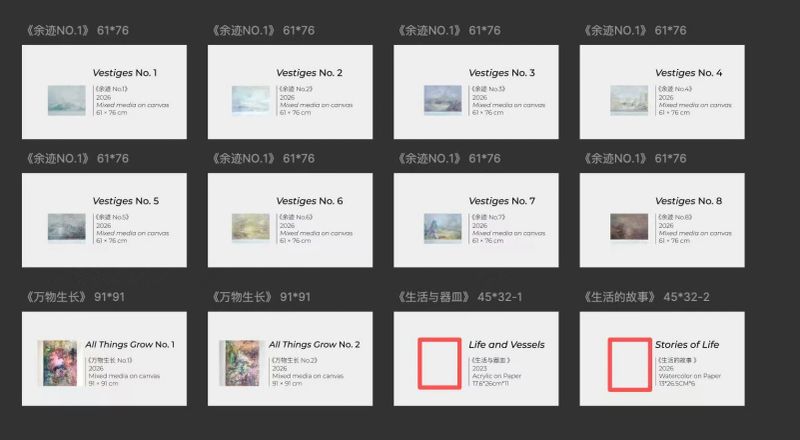
RECENT SERIESResidual Traces
Exploring what remains after experience has faded.
The Shape of Time
Painting the invisible forms through which time becomes perceptible.
Time and Mountains
Mountains as accumulations of vanished lives.
Time and Forest
Forests remembering without language.
Time and Earth
Land carrying civilizations that no longer speak.
Father's Voice
Investigating what remains after a familiar voice disappears.
BIOGRAPHYHe Anjing is an artist, art historian, and aesthetician.
He received his Ph.D. from the Central Academy of Fine Arts and completed postdoctoral research at the Chinese Academy of Social Sciences.
He is currently a Visiting Scholar at Harvard University and an Associate Professor at the University of Science and Technology Beijing.
His artistic practice develops alongside long-term research in Chinese visual culture, aesthetics, memorial writings, and image theory.
Working between painting and scholarship, he investigates how time reshapes relationships, memory, and the visible world.
Rather than preserving the past, his paintings explore how disappearance becomes continuity, and how the world continually transforms loss into new forms of life.
SELECTED SOLO EXHIBITIONS2026
Painting What Continues
Harvard University CAMLab
Cambridge, Massachusetts, USA
2022
Fragmented Reflections
Yamingtai Art Gallery
Beijing, China
2019
Beyond the Light
541 Art Space
Sydney, Australia
2019
Solo Exhibition
China University of Mining and Technology
Beijing, China
2016
Traces of Ancient Civilizations
Museum of Egyptian Modern Art
Cairo, Egypt